A lot of fountain pen YouTube videos I watch are “currently inked” videos in which the person filming talks about the pen and ink combinations they are going to use in the coming month or what they have used in the past month. The number of pens and inks an individual might use in a month is mind boggling to me until I remember that I just don’t physically write as much as I used to.
I don’t make videos but I can blog about my thoughts on the pens I currently have ink in and how I think the pairing of ink and pen work for me. Because I have more than a few pens and I do plan on acquiring more ink samples and occasional bottle I think this will become a series. I doubt that it will be even close to monthly let alone weekly but it will be recurring over time.
And with that let’s get into the fountain pens I currently have inked as of today.

Currently I have a total of five fountain pens inked up. Four of them are my own and one is on loan for me to test.
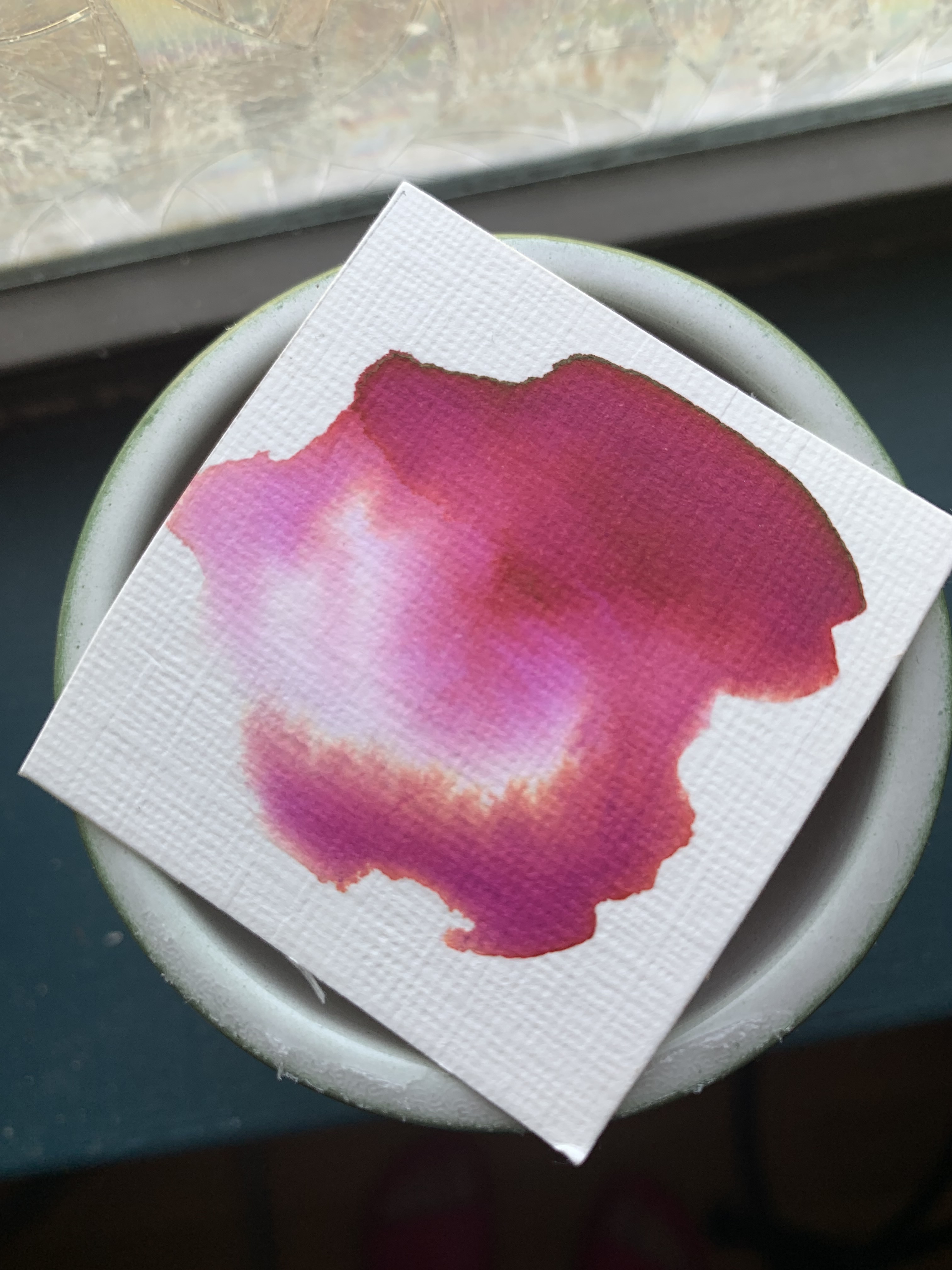
- Pilot Vanishing Point with a medium <M> nib is inked with Diamine Syrah. (On loan)
- Lamy Al-Star with an Extra Fine <EF> nib also inked with Diamine Syrah.
- Platinum Preppy Wa with a Fine <F> nib is inked with a Platinum Black ink cartridge.
- Hong Dian LT N23 (Year of the Rabbit) with an Extra Fine <EF> nib is inked with Pilot Iroshizuku Ka-Jaku
- Retro 51 Lincoln with a Fine <F> nib is inked with Noodler’s Heart of Darkness. (Not pictured as it’s in my purse.)

I’ll start with the Pilot Vanishing Point first by saying that it took me a few days to recover from the amazement of being offered to try this pen out. Generally speaking I don’t know many fountain pen users that will loan out their pens. Especially the more “expensive” ones. The mere idea of having it returned damaged in some way is a strong deterrent for most. I am very grateful to the person that decided that they trust me to not damage their fountain pen. (It has pretty much stayed on my desk this entire time I’ve been testing it.)
If I had a wish list of pens the Vanishing Point is not on it. I would say I was more curious about the pen. It has the form factor of a clicker pen most associated with ball points or roller balls. In essence it retracts the entire filling mechanism and nib back into the body of the pen and a little flap seals the pen from drying out. If you don’t like messing with caps or like the feel of clicker pens you might enjoy using this pen. Over the last few weeks while sitting at my desk I used the Pilot Vanishing Point to take notes, practice hand writing via transcription of some poems and generally wrote on a variety of different papers. I had minor issues filling the pen with ink – it was difficult to gauge how far I had to dip the nib into the bottle and it didn’t seem to want to pull ink into the ink chamber. The combination of Diamine Ink Syrah and this pen might not be the best pairing. No matter what paper I wrote the ink flow was relatively smooth but the nib gave me feedback and squeaked continuously. I didn’t have an issue with the weight of the pen though it did take a little time to adjust my writing as the pen kept wanting to roll in my fingers even with the clip as guide to hold it. Could this have contributed to the squeakiness of the nib and the feedback? Possibly. If I reink the pen with a Pilot ink and the writing experience is the same then it would be highly likely.
I really like writing with my Lamy Al-Star. It’s a smooth writer and it plays well with all the inks I’ve used in it so far. My preferred method of inking Lamy pens is via cartridge. I take an cleaned out empty Lamy cartridge and syringe fill it with ink. While I had no real qualms with pairing Syrah with this pen – it wrote beautifully when I used it. I did find myself wishing I was using a medium nib instead. I think perhaps this was because of my experience with the Pilot Vanishing Point’s medium nib. Lamy makes it very easy to change nibs on most their pens and getting an additional nib isn’t that expensive. I was in the process of putting a medium nib on my wish list for a future purchase when I remembered I also own a Lamy Safari. I dug the Safari out of my pen box and checked the nib size because I couldn’t remember off the top of my head. It was a medium. I looked up a reference video on how to change Lamy nibs so I wouldn’t make a mistake and proceeded to swap the nibs. The Lamy Al-Star didn’t skip a line and writes exactly like I want with Syrah and a medium nib. This was my first foray into nib swapping and while I realize not all pen brands swap nibs as easily as Lamy, I’m glad my experience went well.

I haven’t decided if I like the Platinum Preppy Wa. When I first put the ink cartridge in and started writing it worked well enough. But when I picked it up a second and third time it was nothing but hard starts and skips. As I’ve continued to use the pen it has somewhat improved ink flow but still skips more than I would like. I can’t say much about the ink itself. It’s a standard black as far as I can tell. Maybe once whatever kinks the Preppy has are worked out I’ll have a better picture.
I picked up the Hong Dian LT N23 Year of the Rabbit (2023) earlier this year and when it arrived I inked it up with Pilot Iroshizuku Ka-Jaku almost immediately. The nib on this fountain pen writes so smoothly and I feel like the ink is a perfect match for it. The all metal pen is on the heavier side and I would not recommend posting the cap at all. It sits comfortably in my hand and I feel like I could write with it for an extended period if needed. This is truly a delightful combination. I’d be hard pressed to fill this pen with any other ink and I am not a person that generally has to match an ink to a pen.
The Retro 51 Lincoln has only ever had Noodler’s Heart of Darkness in it. Primarily because I use it as my every day carry pen. If I am not using it at my desk for something specific it lives in my purse. Noodler’s Heart of Darkness has been my go-to black ink for several years though you wouldn’t know that looking at how much is in the bottle. It works well in the pens I’ve used it in without complaint. In the Retro 51 it has started to stall a bit but I think that’s just because I haven’t cleaned the pen recently. I just keep refilling a cartridge as needed and continue on. Recently I’ve been contemplating switching to De Atramentis Archival Black since I already own three inks from the Document ink line.
And that’s it for currently inked pens. Do you have any combinations of pens and inks that you really like right now?
Much love,
Charlie

 Loose Endings Studio